Bridging the Gap between the Digital World and the Physical World
The opening of international borders over the next 12 months will see an evolution of the global mobility operating environment. I recently introduced one likely evolution - the transition from global mobility as we knew it pre-COVID to a hybrid multi-local mobility environment. You can read more about this here.
Another product of the COVID-induced disruption is the gap which has widened between the digital world and the physical world. The digital world has thrived during the COVID-19 pandemic – Zoom and technology platforms have done great - but the physical world such as airlines and the tourism industry have done poorly.
This sudden and dramatic shift to digital has created a looming challenge for the complex and fast evolving needs of businesses operating globally and who need to manage a global workforce.
Technology developments will help business manage risk and transact more efficiently, but it will not be able to meet many of the complex advisory needs of the business community in the near term.
Additionally, business and mobility leaders are increasingly looking for technology platforms which enhance the employee experience rather than it merely being a tool to manage cross-border transactions.
With this fast-changing business operating environment as a backdrop, it’s timely to examine how the legal and professional services industry supporting the cross-border needs of business has adjusted to supporting the needs of business in the post COVID-19 world.
A good example to illustrate this point is the global immigration advisory industry. COVID-19 has delivered the biggest disruption to the global immigration industry in our lifetimes. It remains to be seen just how effectively the cross-border immigration and destination management industry has pivoted to align service delivery models to the new global mobility operating environment.
One issue is very clear. The business community has increasingly shifted its value proposition from information to insights. With the sudden halt in processing of visa and work permits by governments globally as COVID-19 spiked, so too did the historical transactional foundation of service delivery.
Put simply, the value attached to compliance services such as preparing and lodging visa applications or taxation returns has diminished, whilst the value attached to workforce talent planning and design which incorporates compliance and risk management assistance has increased significantly.
COVID-19 has fast-tracked this transition to insight driven needs mainly due to the rapidly changing and complex border control measures introduced by governments worldwide.
If Australia is to realise its opportunity to be a regional talent hub in the Asia Pacific, business will need to offer their best and brightest a new world experience which puts them at the centre of the user experience.
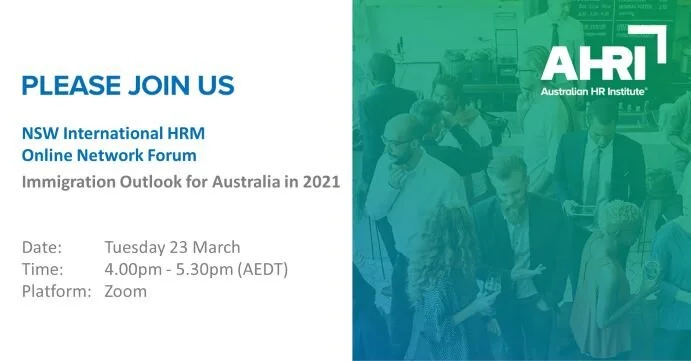
To learn more about how the gap between the digital world and the real world is likely to impact your talent and your organisation, please register to attend the session being hosted by the Australian Human Resources Institute (AHRI).
Details of the webinar including online registration to attend the event can be found here.